
Global Data at Sea & Port: The Best eSIM Solutions for Seafarers
In this article
You find yourself on the deck of a ship full of cargo, about to arrive at a crowded international port after having travelled for weeks. You only have a few hours of time off the ship, so it is important that you make the most of your time.
Your plans include the following: Contact your relatives, check your bank account, organize transportation, and load any necessary travel documents.
Upon arrival, you turn your phone off in aeroplane mode, expecting to receive a signal, but instead, you see the fearsome sign saying “No Service".
You now have very little time. In a port city like this one, finding SIM card vendors is time-consuming. You could try using public Wi-Fi, but this will jeopardize your sensitive information, banking information, and active accounts.
Changing SIM cards is also problematic since exchanging such a small piece of plastic in windy surroundings with luggage around is not very easy. If the ejector pin drops or you lose the SIM from your phone, you may end up without your number.
Include limiting carrier plans, unforeseen roaming fees, and poor reception in certain harbours, and a few hours in port can soon become a frustrating experience in trying to get connected.
For sailors and those working in the maritime industry, keeping in touch should never have to start with a search at the port. Being connected digitally before arriving in a port has made the short time one spends ashore much easier to manage.
Staying connected while moving between countries requires a flexible solution. With SIMZY eSIM plans, seafarers can choose a suitable data plan before traveling and avoid the hassle of purchasing different physical SIM cards at every port.
Facts & Reality Check: Why Traditional Roaming Can Be a Problem
The challenge of staying connected at sea is well known. Onboard internet is typically unreliable, slow, and quite expensive, making it difficult for the crew to stay connected when administrative duties are over.
In addition, once you step into coastal waters or land at any port, your ordinary domestic plan creates new problems for you, including unreasonable international roaming rates, daily charges, as well as high data consumption and overage costs.
Using a physical SIM card creates another problem:
Risks of losing it: Inserting these small plastic cards when changing ports is not easy, as losing one means losing your mobile communication ability.
Fatigue travelling from Port to Port: Buying local SIMs becomes exhausting, requiring you to search for mobile operators in every new port, wait in lines to buy a SIM card and fill out an application. This is absolute madness if you are moving across the Asia-Pacific region or Europe.
For seafarers who often move from one country to another, it makes sense to have a flexible connection in advance.
Before selecting a connectivity solution, compare coverage, data allowance, validity, and destination availability. Explore global eSIM plans to find an option that fits your route and travel requirements.
Practical Travel Hacks for Maritime Mobile Efficiency
Utilize your shore time to the fullest by prepping your phone prior to disembarkation.
Keep the existing number for 2FA: Use Dual SIMs to receive calls and security alerts to your existing phone number and use SIMZY to connect to data.
Download maps: Save areas of the city on Google Maps prior to departure.
Get rides immediately: Make use of active mobile data to book an Uber right at the terminal.
Save data for essential tasks: Avoid heavy app updates, media downloads, or cloud backups until connecting to Wi-Fi.
Borderless Freedom All Over The Seas
Living at sea does not mean losing the chance to live on dry land. By preparing your eSIM in advance, you maximize your shore time and don’t have to deal with Travel SIM card issues.
Whether you're sailing between multiple countries or spending several days in different ports, having reliable mobile data can make communication and everyday tasks much easier. Explore SIMZY eSIM plans and find an eSIM option for your next journey.
Keep reading

The Best eSIM for the USA (2026): The Updated Traveler's Guide
Find the best eSIM for the USA with SIMZY. Compare affordable data plans, including unlimited options, and stay connected without costly roaming fees.

The Ultimate South Korea Travel eSIM Guide: High-Speed Data in Seoul & Beyond
Stay connected throughout South Korea with a high-speed travel eSIM. Discover flexible eSIM plans for Seoul, Busan, Jeju, and beyond, with 5G data, voice and SMS options, easy activation, and reliable connectivity for your trip.
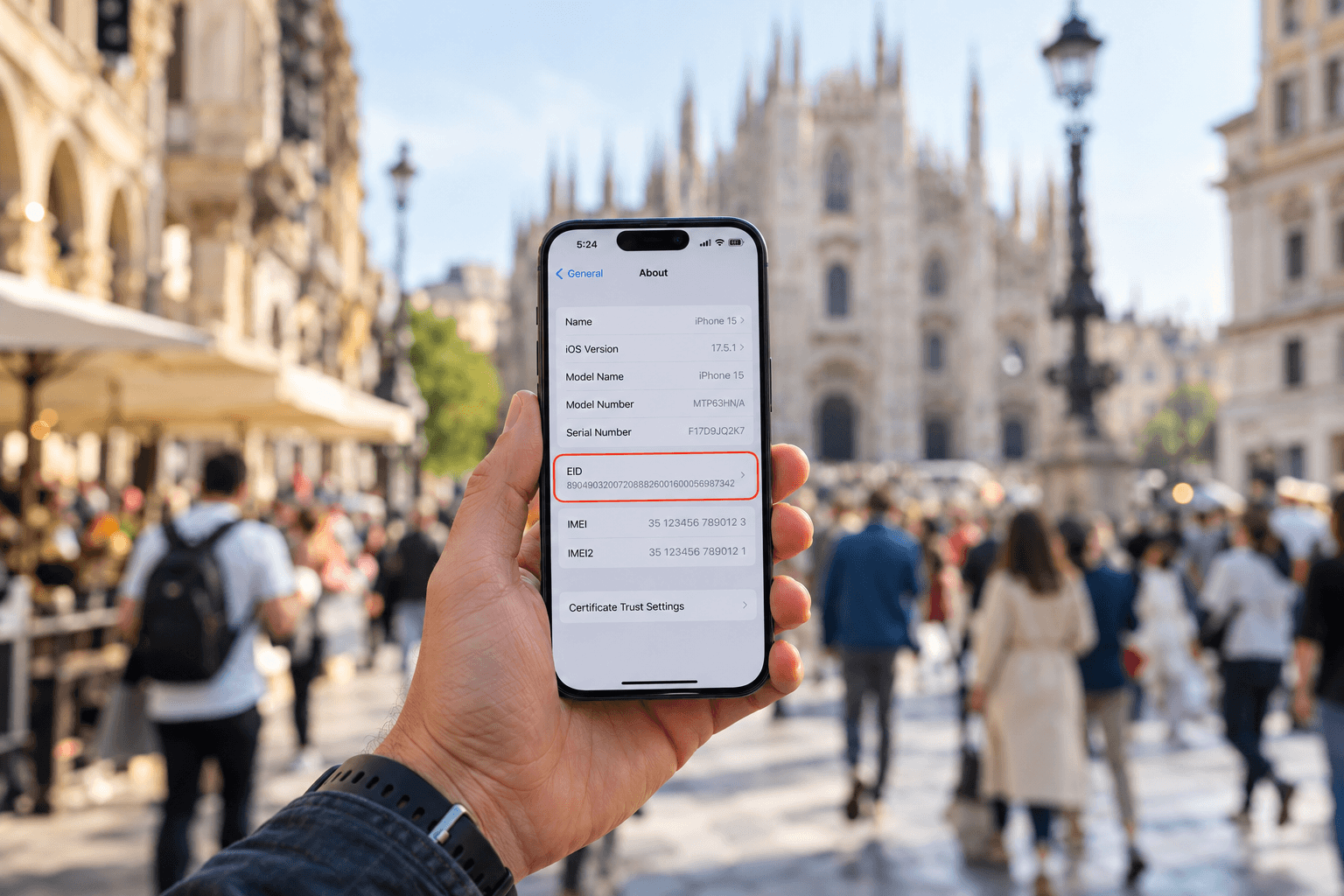
What is an EID number and how do you find it?
Learn what an EID number is, where to find it on iPhone and Android, and how it helps activate an eSIM. Get connected with a SIMZY eSIM today.