
eSIM vs. Physical SIM: Which Is Better for International Travel?
Not all travel eSIMs are the same. Here is what actually matters when you compare them — coverage, pricing, flexibility, and the small print.

In this article
You need speed, convenience, and flexibility while you travel? Traveling in 2026 is all about comfort and experience. If you cannot enjoy or experience the moment, the whole trip feels sad. That is why choose an eSIM. You can land in a place, skip the queues, scan the QR code and connect immediately.
There are many differences between eSIM and physical SIM. Let this guide help you make the best decision between what you can choose:
When contrasting travel connectivity options, the differences start with the activation process: Travel eSIMs allow for an instant download via QR code or app before departure, whereas Local Physical SIMs must be purchased at an airport kiosk upon arrival, requiring a physical card swap. For multi-country trips, eSIMs offer seamless transitions with regional plans that cover multiple countries automatically, while physical SIMs require buying and swapping a new card in every country. A significant advantage of the eSIM is keeping your primary number active concurrently for 2FA texts and emergency calls; conversely, a physical SIM must be removed and stored, risking the loss of your main line connection. Regarding plan types, eSIMs are primarily data-only (utilizing VoIP for calls), while local physical SIMs usually include a local phone number with voice and SMS minutes. Finally, in terms of pricing and value, eSIMs provide transparent, fixed pricing set upfront online, whereas local physical SIMs are often cheaper for high-data usage but are frequently subject to price markups at airport kiosks.
Why eSIM Wins for Most Travelers
Zero Airport Hassle: You can set up your plan before leaving home and turn it on the moment your plane lands—skipping long airport vendor lines and avoiding currency exchange confusion.
Keep Your Primary Line Active: Using Dual SIM technology allows you to keep your primary physical SIM enabled for bank SMS authentication codes while routing all cellular data through your travel eSIM.
Multi-Destination Convenience: Regional travel eSIMs (e.g., covering all of Europe or Southeast Asia) switch networks automatically as you cross borders without needing new SIM cards.
Physical Security: Storing your data plan digitally inside the phone eliminates the risk of dropping or damaging your home carrier's micro/nano SIM card while abroad.
When a Physical Local SIM is Still Better
Long-Term Single Country Stays: Local physical SIMs bought outside the airport (e.g., at a local convenience store) often offer lower rates for massive data allowances over 30+ days.
Traditional Phone Calls & Texts: If you need a local phone number to book local transport, call restaurants, or receive domestic SMS messages, a physical local prepaid SIM usually includes a local number.
Older Device Models: Budget phones or older device generations may lack embedded SIM chips entirely, making physical SIM cards the only available option.
Best Setup Strategy: The Traveler's Dual SIM Workflow
If your device supports Dual SIM Dual Standby (DSDS), use this optimal setup:
Primary Physical SIM: Leave your home carrier card in the slot, but turn off data roaming to avoid unintended pay-per-MB fees from your home carrier.
Secondary Travel eSIM: Set as your default mobile data line with data roaming ON for cheap local network access.
Conclusion
While local physical SIMs can offer slight cost savings for long-term stays, the eSIM is hands-down the winner for modern international travel. Swapping physical SIMs is a hassle, it risks losing your primary carrier card, creates arrival delays, and compromises your device's physical security. eSIM technology turns global connectivity into a simple, digital superpower: you land, activate your plan via app or QR code, and instantly start navigating, messaging, and exploring without missing a step. For seamless travel, digital freedom, and keeping your primary home line active for critical banking texts, the eSIM is undeniably the better choice.
Keep reading

Best eSIM for Japan in 2026: Stay Online from Narita to Kyoto
Find the best eSIM for Japan in 2026. Compare data plans, coverage, prices and setup tips to stay connected from Narita to Kyoto with SIMZY.
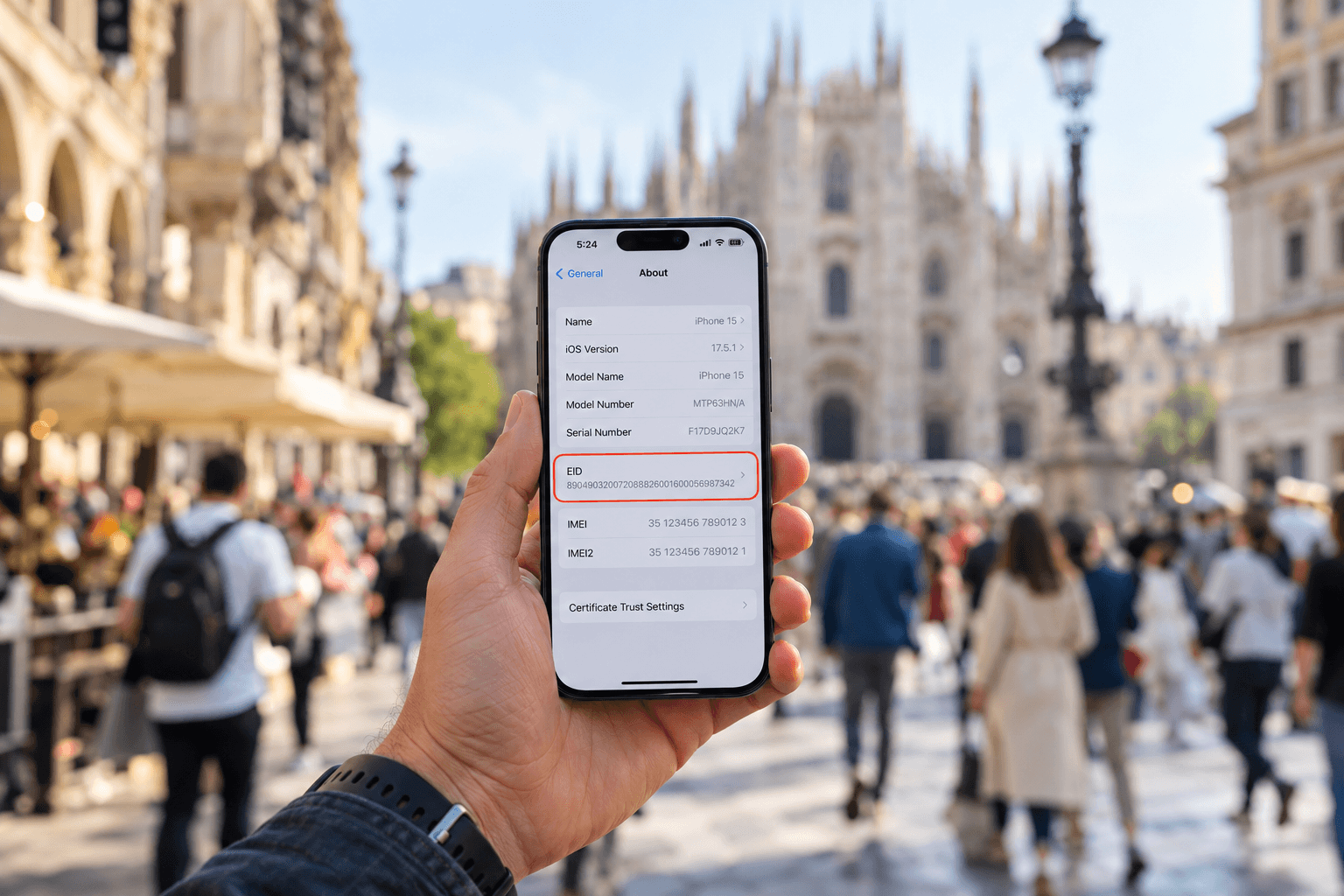
What is an EID number and how do you find it?
Learn what an EID number is, where to find it on iPhone and Android, and how it helps activate an eSIM. Get connected with a SIMZY eSIM today.

Will You Be Impacted by the Turkey eSIM Block? What Travelers Should Know
Is there an eSIM ban in Turkey? Learn about Turkey's eSIM restrictions, what they mean for travelers, and how to stay connected during your trip.