
Nano SIM vs. eSIM: Key Differences Every Traveler Should Know

In this article
At home, there is quite possibly a tiny plastic tray, a pin-like SIM ejector, and a couple of old SIM cards somewhere in a drawer that you have had in mind to dispose of but never did.
This junk drawer can be seen as a museum for every occasion you need to stop what you’re doing, search through your luggage, and conduct a minor operation on your phone to be able to connect to the Internet.
Hence, this delicate procedure has a name: the Nano SIM.
For a while, this was the only option available, but you have other options now.
On the off chance you never really grasp what exactly the differences are between a SIM card and an Travel eSIM, and why it matters when you have found yourself in a foreign airport and have an almost empty battery, read this.
What's Actually Different (It's Not Just Size)
Avoid the hassle of buying a local SIM card when you land. Explore SIMZY’s international travel eSIM plans and choose a data package for your destination.
A Nano SIM has been the most compact type of card used in mobile devices for years. The concept stays the same. A small card needs to be inserted into the device. The information includes the user's phone number and the availability of the network connection, and if it needs to be changed, a new card must be inserted.
On the other hand, an Travel eSIM does the same job without being physically present on the phone. It is already installed and soldered into the device. There is no specific tray and pin to insert during the process. When a new connection is required, instead of using a card, a user should download a special profile required for services.
Where it Actually Doesn’t Work for You as a Traveller
Avoid the hassle of buying a local SIM card when you land. Explore SIMZY’s international travel eSIM plans and choose a data package for your destination.
1. Obtaining a Nano SIM usually requires visiting a physical location, such as a store or kiosk, and it limits you based on their inventory and hours of operation, in addition to any lines of customers ahead of you.
2. Because changing SIM cards usually deactivate the previous one, you do not receive texts/phone calls or two-factor authentication codes until you put the original one back into your phone.
3. This SIM card is so small that it can easily be lost in a jacket pocket, dormitory corner, or the bottom of the backpack, and therefore, if it is lost, it is impossible to make phone calls.
4. The fact that every country visited requires you to repeat the entire process is also true.
Travel eSIM has eliminated all those problems by being a completely digital currency.
Three Habits Worth Building In
Apart from the eSIM itself, a few minor tweaks can make your travels much easier:
1. Maintain your bank notifications and two-factor authentication on your home phone and let your roaming eSIM do the heavy lifting for data-intensive activities like navigation and messaging.
2. Load your route on Google Maps before landing and save it for offline use so you don’t have to worry about finding a connection as soon as you land.
3. Set updates to only download on Wi-Fi, a clever way to make sure your plan lasts a while without worrying about it.
4. Ensure that your Travel eSIM is activated just as you are getting off the plane so that you can ping for your Uber as soon as you land rather than having to find a connection first.
That collection of old SIM cards can stay put. The next journey is definitely not going to use one of them.
Keep reading

Best eSIM for Japan in 2026: Stay Online from Narita to Kyoto
Find the best eSIM for Japan in 2026. Compare data plans, coverage, prices and setup tips to stay connected from Narita to Kyoto with SIMZY.
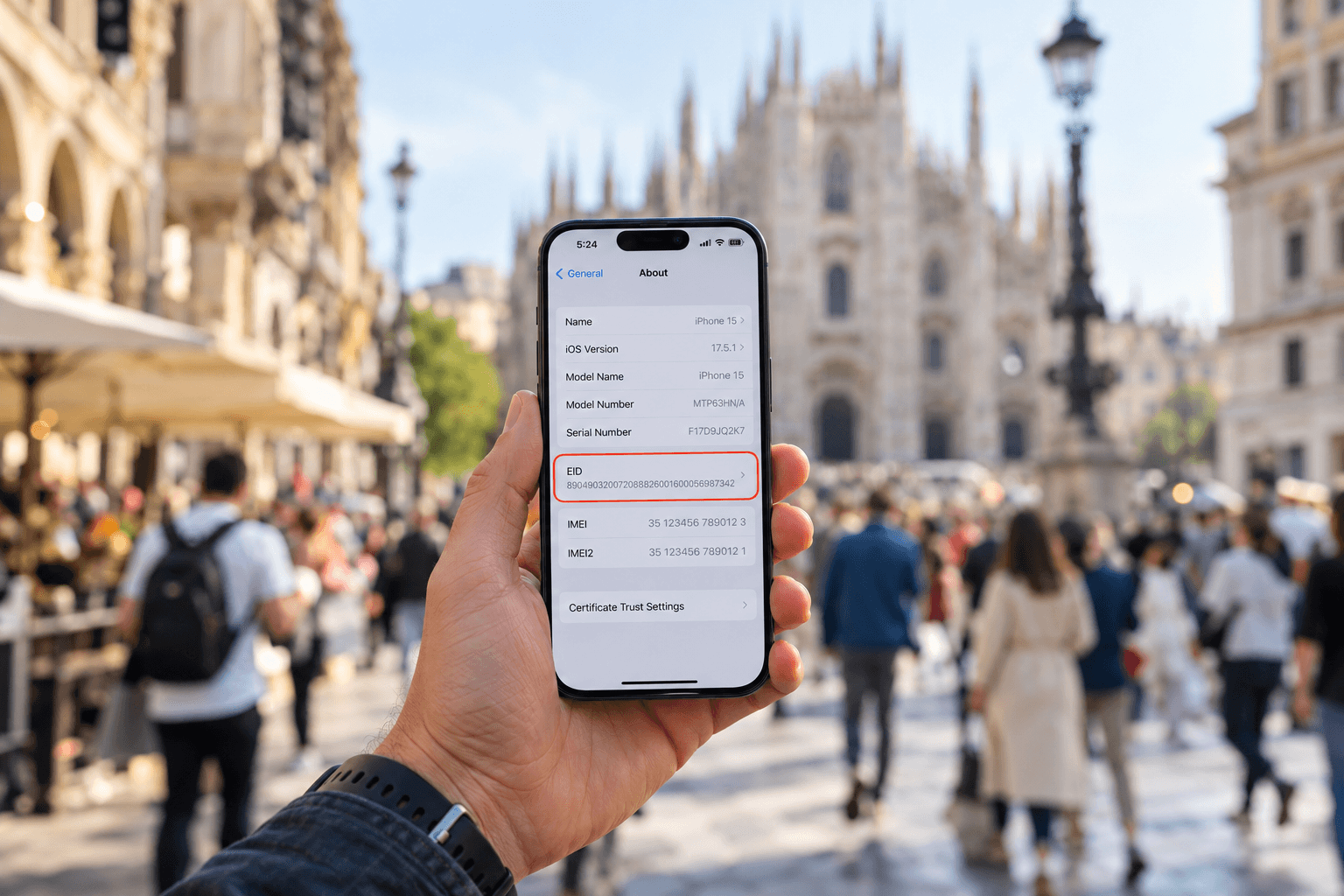
What is an EID number and how do you find it?
Learn what an EID number is, where to find it on iPhone and Android, and how it helps activate an eSIM. Get connected with a SIMZY eSIM today.

Will You Be Impacted by the Turkey eSIM Block? What Travelers Should Know
Is there an eSIM ban in Turkey? Learn about Turkey's eSIM restrictions, what they mean for travelers, and how to stay connected during your trip.