
Tokyo to Kyoto by Bullet Train: Shinkansen Travel Guide
Planning a Tokyo to Kyoto trip by bullet train? This guide covers everything you need to know about the Tokaido Shinkansen, including Nozomi, Hikari, and Kodama services, journey times, tickets, seat options, fares, luggage rules, Mount Fuji views, and essential station tips. Learn how a Japan travel eSIM can also help you stay connected while navigating stations and checking real-time travel information.
In this article
Are you thinking of travelling from Tokyo to Kyoto on the bullet train? We have put together a comprehensive list of all the aspects of the Tokaido Shinkansen, such as the Nozomi, Hikari and Kodama trains, including travel times, ticket prices, travel options, fares, luggage restrictions, views of Mount Fuji and some useful tips about the stations. You will also find out how a Japan travel eSIM can help you navigate through the stations while checking travel information.
Navigating the Tokyo to Kyoto Bullet Train with Real-Time Data
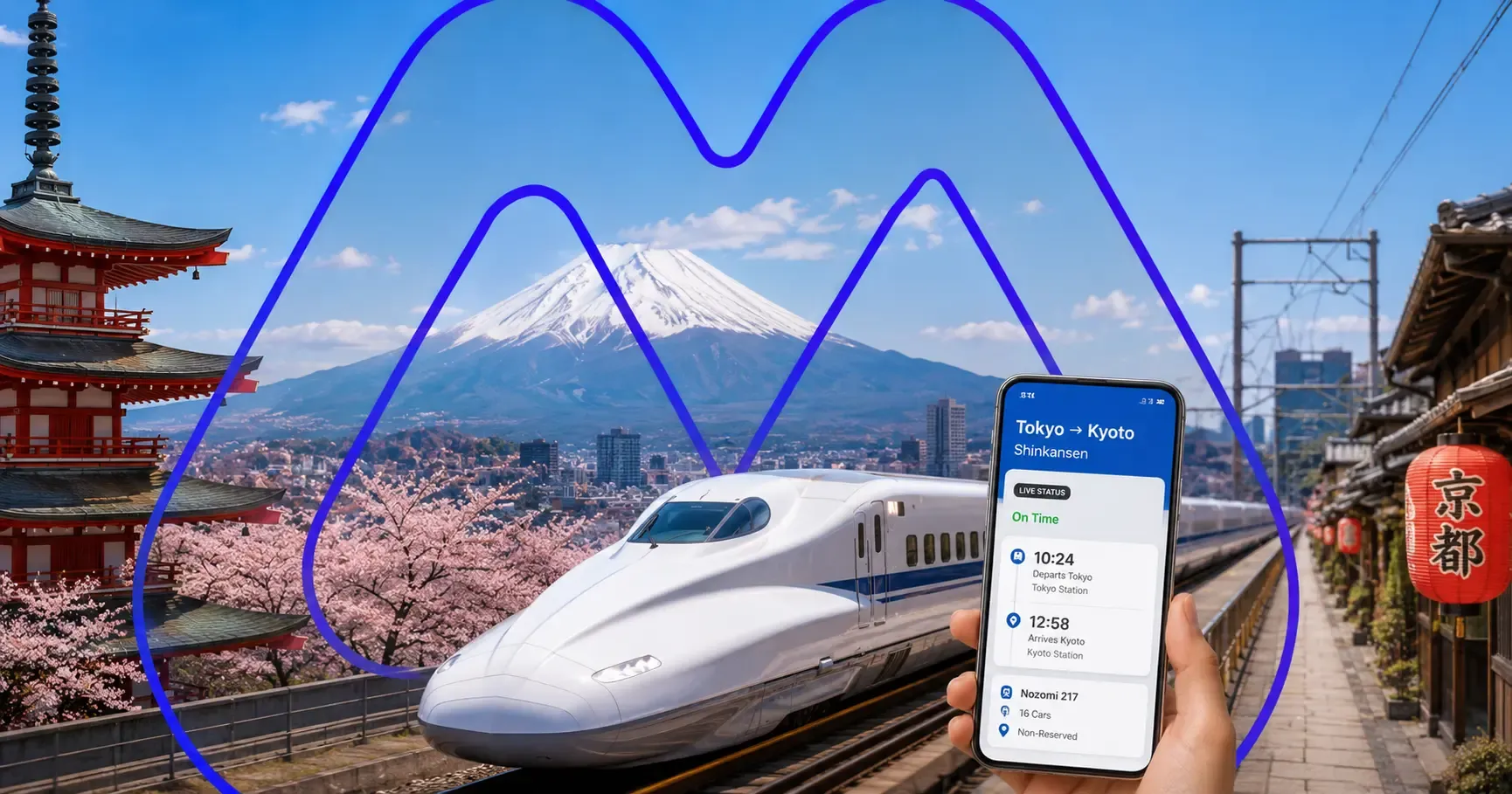
The Tokaido Shinkansen, which is dubbed one of the best rail journeys in the world, connects Tokyo, the capital city of Japan, and Kyoto, which is one of the oldest cities in the country. The distance between the two cities is 450 km apart, and with the train's speed of 320 km/h that the train covers, the ride of 5 - 6 hours is reduced to 2 or 3 hours.
Being at a large terminal station like Tokyo or Shinagawa requires mobile data because you need to buy tickets in advance, learn the platform information of the train in real time, and know the transport options at your disposal. You can only experience all of this with the help of a SIMZY Japan travel eSIM, which allows you to download a data plan before arriving in Japan.
The Tokaido Shinkansen: Japan's High-Speed Lifeline
Beginning its operations in 1964 in conjunction with the Tokyo Olympics, the Shinkansen became the world's first high-speed rail transport and maintains the first place in efficiency, as well as in the area of safety:
High velocity and high efficiency: The Shinkansen can run at a high operating speed, reaching the destination point in the period of 2 hours and 15 minutes.
One of the most notable features of this kind of transportation: Every ten or fifteen minutes, some trains depart from main stations, allowing complete flexibility in travel plans.
Onboard comfort: All the trains offer clean, spacious, comfortable seats, power outlets for laptops, lavatories, space for baggage, and silent cabins aimed at resting and working.
Choosing Your Train: Nozomi vs. Hikari vs. Kodama
Three different Tokaido Shinkansen services serve the Tokaido Shinkansen line:
Nozomi (The Fastest): This service is the most widely used, as it stops at the least number of stations (Tokyo, Shinagawa, Shin-Yokohama, Nagoya, Kyoto, Shin-Osaka). The trip lasts around 2 hours and 15 minutes, and passengers using a standard Japan Rail (JR) Pass will have to pay a special fee to use the Nozomi.
Hikari (Balanced & JR Pass-Friendly): The Hikari leaves roughly twice every hour and takes between 2 hours and 40 minutes to finish its journey. It makes more stops, while the standard fare of the JR Pass is sufficient to travel on the Hikari.
Kodama (Beautiful & All-Stopping): This is the slowest way, making stops at the 14 intermediate stations along the Tokaido route and taking approximately 3 hours 30 to 45 minutes. It is the best choice for those who wish to visit some smaller towns or find a spot with unreserved seats.
Tickets, Seat Classes & Fares
1. Fare Elements: An ordinary one-way Shinkansen ticket between Tokyo and Kyoto costs approximately $100 to $150. The price consists of the base fare for distance travelled, as well as the Shinkansen express supplement and seat reservation costs.
2. Non-reserved seats: This is the most versatile option since it gives you freedom to travel on any Shinkansen express train in designated non-reserved carriages, but there is a possibility of having to stand on busy routes.
3. Reserved seats: This guarantees the availability of a seat in standard carriages and is highly advisable for busy travel time periods (Cherry Blossom season, Golden Week, New Year).
4. Green Car (First Class): This more expensive option allows you more room, more leg space, the ability to put your feet up, and a less noisy environment.
Essential Shinkansen Travel Tips & Etiquette
Train riders heading from Tokyo to Kyoto should book a seat at the window. If one travels on a normal carriage, they should try to book the E seat. For those riding in the Green Car, the D seat is ideal for catching Mount Fuji when the weather permits.
When carrying oversized luggage, remember that your suitcase should measure less than 160 cm to be able to fit on overhead racks. However, luggage measuring more than 161 cm and less than 250 cm would require reservation of a specific seat for oversized luggage.
The Ekiben culture is just astounding, as the habit of eating while on board commuter trains is frowned upon. If one wants to try Ekiben, they can try it on the Shinkansen while drinking hot tea.
Tokyo Station is large, and it will take approximately 20 to 30 minutes to find the Shinkansen gates. It is also possible to board your train at Shinagawa Station in southern Tokyo if one requires the comfort of a smaller station.
Stay Connected Across Japan With SIMZY
Having instant mobile data aids in smoothly going through Japanese train stations, looking at platform boards, and making travel reservations.
1. Instant High-Speed 5G Access: Get instant access to major Japanese mobile carriers right after arriving at Narita Airport, Haneda Airport, or Kansai Airport.
2. Convenient and Flexible Plans: You can select from regional data packages in Asia or local data plans for Japan according to your stay.
3. No Wild Roaming Charges: Avoid unknown costs from your mobile carrier and skip the long queue for pocket Wi-Fi or SIM card rentals.
4. Dual SIM Convenience: Keep your domestic number for authentication while using SIMZY for internet access.
Critical Pre-Installation Rules: Wi-Fi & Home Country Setup
Ensure Active Wi-Fi Connection: An active internet connection is necessary for downloading eSIM profiles because the provisioning files need to be downloaded over the internet. Make sure that your Wi-Fi connection is reliable throughout the process.
Install Before Flying: Complete the installation before getting on your flight. This is important because airport Wi-Fi can be unstable or locked away behind a geographical firewall.
Keep reading
Best eSIM for Japan in 2026: Stay Online from Narita to Kyoto
Find the best eSIM for Japan in 2026. Compare data plans, coverage, prices and setup tips to stay connected from Narita to Kyoto with SIMZY.
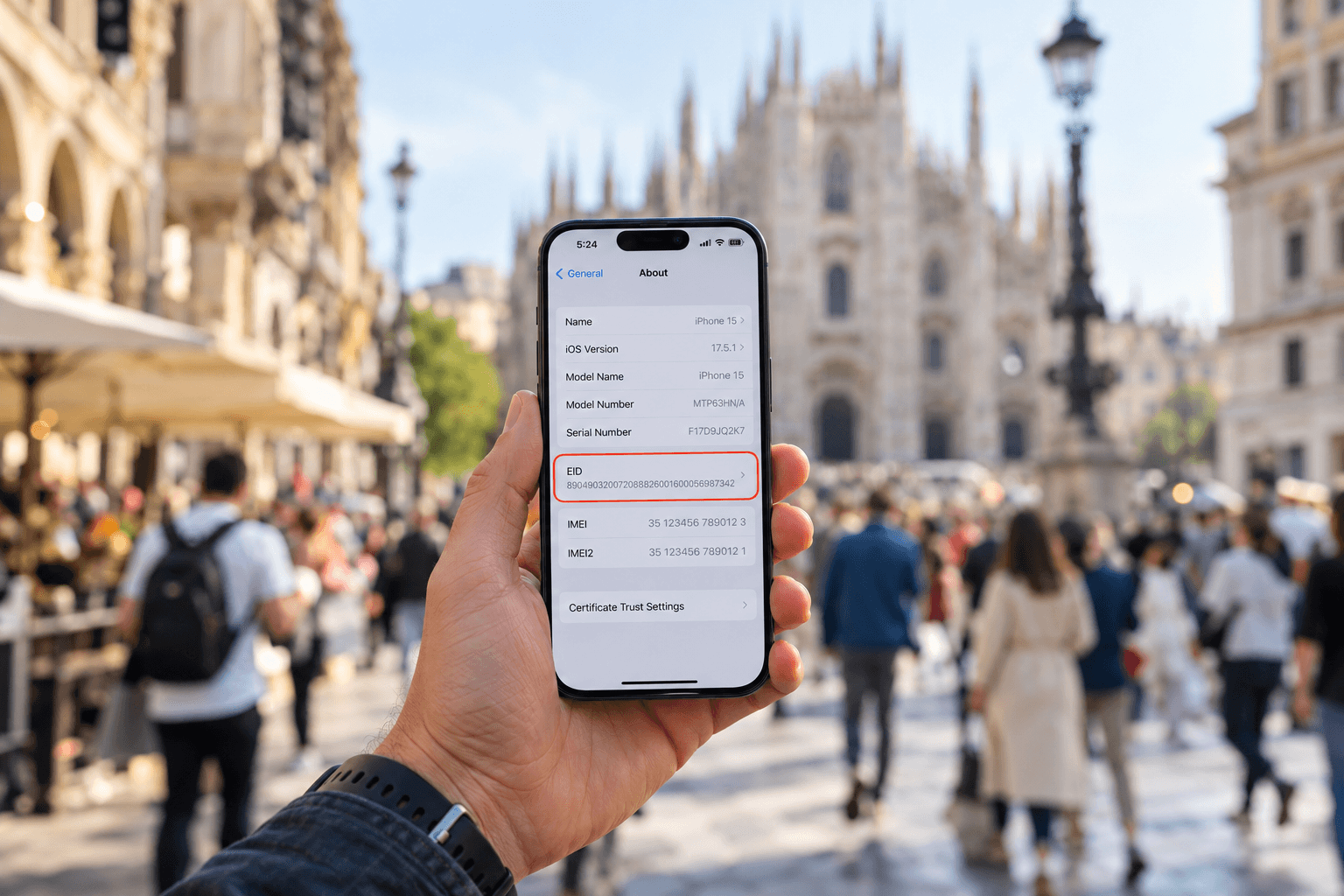
What is an EID number and how do you find it?
Learn what an EID number is, where to find it on iPhone and Android, and how it helps activate an eSIM. Get connected with a SIMZY eSIM today.

Will You Be Impacted by the Turkey eSIM Block? What Travelers Should Know
Is there an eSIM ban in Turkey? Learn about Turkey's eSIM restrictions, what they mean for travelers, and how to stay connected during your trip.